Most Wichita Falls homeowners can live in their house during foundation repair without packing a single bag. Whether you need pier and beam foundation repair in Wichita Falls, TX, or full slab stabilization, the answer is almost always the same: you stay home. The real answer depends on the severity of the damage, the repair method your contractor uses, and whether utilities need to be temporarily shut down. North Texas clay soil shifts hard through every drought and rain cycle, so foundation movement is part of life here. The good news is that most repairs happen around your home’s perimeter. You deal with noise, vibration, and some dust. You do not deal with homelessness.
Live in House During Foundation Repair: What Most Homeowners Can Expect
Can You Live in a House During Foundation Repair Safely?
Yes. For the vast majority of Wichita Falls homeowners, staying home is completely safe. A licensed structural engineer assesses the foundation before work begins. Contractors monitor elevation levels throughout the process. The slab stays supported at every stage of pier installation.
Safety becomes a real concern only in rare situations. Severely bowing walls, major structural instability, or a dramatically settling slab may require a professional to recommend temporary relocation. That call comes from a licensed engineer, not from a quick estimate alone.
Live in the house during foundation repair and exterior repairs
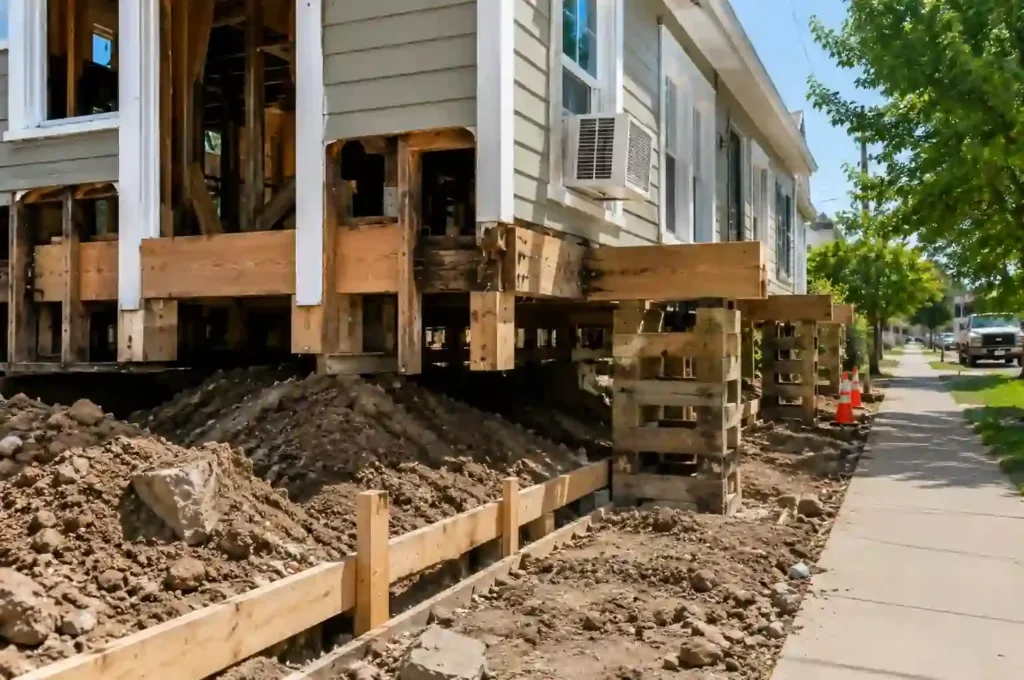
Exterior pier installation is the most common foundation repair in North Texas. Workers dig along your slab perimeter, drive steel piers into load-bearing soil below, and stabilize the foundation from the outside. You stay inside. The disruption stays in the yard. Expect crew vehicles on your curb, equipment staged along the foundation, and work starting around 7 a.m.
Do You Have to Move Out for Foundation Repair?
The answer is usually no. Sometimes yes. Here are the situations where temporary housing actually makes sense:
- Interior pier installation that requires cutting through your slab floor
- Major structural lifting across the full foundation width
- Severe slab damage near load-bearing walls
- Complete water or gas line shutoffs lasting more than one day
- Extensive demolition before stabilization can begin
Most Wichita Falls repairs do not involve any of these. A perimeter pier job on a typical ranch home wraps in three to five days. You get to sleep in the comfort of your own bed every night.
Signs You May Need Temporary Housing During Foundation Repair
Watch for these red flags before repair begins:
- HVAC unit requires removal for crew access
- Plumbing stays shut down longer than 24 hours
- Interior concrete cutting creates excessive dust levels
- A structural engineer flags active instability
- Full flooring removal spans multiple rooms
Ask your contractor directly whether relocation is recommended if any of these come up during the inspection.
Repair Types That Allow You to Stay Home
Knowing the method matters. Here is how each repair type affects your daily life. If you are evaluating options, reviewing the foundation repair methods used in Wichita Falls gives you a clear picture of what each method involves before the crew ever shows up.
Live in a House During Foundation Repair With Slab Foundation Repairs
Steel Pier Installation
Steel push piers are driven hydraulically through the soil until they hit bedrock or stable load-bearing strata. This is exterior work entirely. You stay home. Noise peaks during driving, but stays manageable with a decent pair of earplugs.
Helical Piers
Helical piers screw into soil using a hydraulic torque motor. They work well in the expansive Permian clay found throughout Wichita Falls and the surrounding Red River corridor. The process is quieter than push pier installation and faster per pier location.
Polyurethane Foam Injection
Foam injection fills voids beneath the slab through small drilled holes. Workers drill from the exterior in short sessions. Disruption is minimal. Most homeowners barely notice this repair happening.
Pier and Beam Repairs
Pier and beam homes sit above a crawl space. Workers access it from outside or through interior access panels. You stay home. Crawl space work creates far less noise and dust than slab repairs.
House Leveling and Underpinning
Hydraulic lifting raises settled sections of the foundation back toward the original grade. The house creaks and groans as it adjusts. Doors temporarily stick. It feels unsettling. It is not dangerous.
Is It Safe to Live in a House With Foundation Problems?
Most Wichita Falls foundation problems develop slowly over the years. Minor drywall cracks or sticking doors are cosmetic symptoms. They are not immediately dangerous. You can continue living normally while scheduling a professional inspection.
Some conditions look completely different.
Warning Signs Your Foundation Problem May Be Unsafe
Call a structural engineer immediately if you see:
- Bowing or visibly leaning interior walls
- Severe floor sagging across multiple rooms
- Cracks are growing rapidly over days rather than months
- A leaning chimney or chimney separation from the roofline
- Major gaps are opening around door frames or window sills
If several of these signs are appearing at the same time, read through the full list of foundation warning signs Wichita Falls homeowners should watch for.
Texas has licensed structural engineers across every major metro. Engineers familiar with North Texas soil behavior understand exactly what Wichita Falls slabs face. Their written assessment should govern any relocation decision.
Live in House During Foundation Repair: What It Actually Feels Like Day to Day
Noise, Vibrations, and Structural Sounds During Repairs
Foundation repair is loud. Steel piers drive with rhythmic hydraulic force. The house creaks as weight shifts and redistributes. Drilling through concrete produces short bursts of high-pitched sound. Inside the home, vibrations travel through the slab and feel subtle underfoot. They are noticeable. They are not alarming.
How Dust, Equipment, and Crew Activity Affect Daily Life
Here is what a typical repair day actually looks like in a Wichita Falls home:
- Crew arrives between 7 and 8 a.m.
- Equipment staged in the driveway and along the foundation perimeter
- Drilling begins in short intervals throughout the morning
- Hydraulic lifting happens in carefully measured stages through midday
- Workers move continuously around the exterior
- Certain rooms near active work zones get temporarily restricted
Interior rooms away from the repair zone stay completely normal. Most homeowners use a back bedroom or the living room as a quiet space during peak noise hours.
Can You Work From Home During Foundation Repair?
Yes, but plan your schedule around noise windows.
Morning hours are the loudest. Schedule video calls and client meetings for mid-afternoon. Use a room on the opposite side of the home from active work zones. Keep headphones on hand. The Internet stays unaffected unless your contractor needs temporary access to your utility panel.
Professionals working remotely near Midwestern State University or the Weeks Park area find this completely manageable with minor schedule adjustments.
Can Kids, Pets, and Elderly Residents Stay During Foundation Repair?
Mostly yes, with real precautions.
Children: Keep young children away from excavation areas and equipment at all times. Open excavation areas and curious young children can quickly become a safety hazard.
Pets: Dogs and cats experience genuine anxiety from hydraulic noise and vibration. Board anxious pets or keep them secure in an interior room far from active work.
Elderly residents: Dust from drilling can aggravate respiratory conditions. Vibration traveling through the floor creates balance risks for residents with limited mobility. Discuss these concerns openly with your contractor before day one.
How Long Can You Live in a House During Foundation Repair?
Most Wichita Falls homeowners stay home for the entire repair. Timeline is everything here.
Typical Foundation Repair Timeline for Wichita Falls Homes
| Phase | Timeline | What Happens |
| Day 1 | Inspection and Excavation | Site assessment, perimeter digging begins |
| Days 2 to 3 | Pier Installation and Stabilization | Steel or helical piers driven to stable strata |
| Days 4 to 5 | House Leveling and Adjustments | Hydraulic lifting, elevation measurements |
| Final Day | Cleanup and Final Inspection | Backfill, surface restoration, walkthrough |
Single-family slab repairs in Wichita Falls are typically complete within three to five business days. Larger homes or severe settlement cases may run seven to ten days. You remain at home under normal conditions.
How Wichita Falls Soil Conditions Affect Foundation Repair
Wichita Falls sits on expansive Permian clay soil. This material absorbs moisture fast and swells. It dries during the summer heat and shrinks dramatically. Drought cycles near Lake Arrowhead State Park and across the Red River valley accelerate this pattern every single year.
Why Expansive Clay Soil Causes Foundation Movement in North Texas
The clay beneath Wichita Falls slabs acts like a slow-moving sponge tied to weather patterns. During drought conditions, soil contracts and pulls away from foundation edges. Slabs settle unevenly. When seasonal rain returns, soil rehydrates and pushes upward. This cycle creates corner cracks, stair-step brick fractures, and interior wall separation.
Experienced contractors design pier systems that reach stable strata well below the active clay zone. In this region, that typically means 15 to 25 feet deep.
Can You Live in a House While the Foundation Is Being Replaced?
Full foundation replacement is rare, but it happens. Workers lift the entire structure with hydraulic jacks, remove the existing slab completely, and pour new concrete. During full replacement, utilities are disconnected for extended periods. Interior access becomes fully restricted. Temporary relocation is necessary in these cases.
Partial replacement affecting only one section of the slab may allow you to stay in unaffected areas of the home. Discuss the scope in detail with your contractor before committing to any timeline.
What Happens to Walls, Floors, and Plumbing During Foundation Repair?
Can Foundation Repair Cause New Cracks?
Yes. As the foundation lifts back toward its original position, the structure adjusts. New hairline cracks can appear in drywall. Tile grout may crack near lifted areas. Both are cosmetic and expected. Homeowners wondering whether existing cracks can be fixed without major work should review how foundation cracks are repaired in Wichita Falls without excavation. A good contractor tells you this before work begins, not after.
Will Plumbing or Utilities Stop Working During Repairs?
In most exterior repairs, utilities stay fully operational throughout the job. Plumbing pressure tests often follow repairs to confirm pipes withstood the lifting process. Gas lines stay unaffected unless a pier location directly conflicts with a buried line.
How Contractors Keep Your Home Safe During Foundation Repair
How Structural Stability Is Monitored During Repairs
Contractors set elevation benchmarks before repairs begin. They measure lift in fractions of an inch at every pier location. Over-lifting damages the structure just as under-lifting fails to fix it. Experienced crews lift slowly, stop at the target elevation, and document every measurement.
Dust Control, Safety Barriers, and Utility Protection
Professional crews use:
- Dust barriers around any interior access points
- Protective coverings over HVAC intake vents
- Clear perimeter markers around all excavation zones
- Post-repair plumbing pressure tests to confirm pipe integrity
Foundation Repair Preparation Checklist for Homeowners
How to Prepare Before Foundation Repair Starts
- Remove wall art and fragile decor from shelves throughout the home
- Move all vehicles out of the driveway before the crew arrives
- Clear a three-foot path around the entire foundation perimeter
- Secure pets in a quiet interior room or arrange boarding
- Cover electronics near work zones with cloth drop sheets
- Confirm daily work hours and access needs with the crew foreman
- Protect hardwood floors near work zones before crews enter
Common Myths About Living During Foundation Repair
Myth: Every Foundation Repair Requires Moving Out
False. Most homeowners stay home throughout the entire process without issue.
Myth: Foundation Repair Will Destroy Your Home
False. Professional repair stabilizes and protects the structure. It does not create new structural damage.
Myth: The House Could Collapse During Repairs
False. Contractors support the structure at every pier location before any lifting begins.
Myth: Utilities Always Shut Off During Repairs
False. Exterior repairs rarely require any utility shutdowns at all.
Why Delaying Foundation Repair Can Make Repairs More Disruptive
How Small Foundation Problems Become Major Structural Repairs
A two-pier exterior job today becomes a ten-pier interior job next year. Settlement worsens during every drought cycle. Plumbing beneath the slab cracks under shifting concrete. Interior walls crack further apart. Repair costs climb. The disruption to daily life multiplies.
Homeowners who want to understand what that cost difference looks like in real numbers can review the detailed foundation repair pricing guide for Wichita Falls.
Wichita Falls homeowners who act early face smaller scopes, shorter timelines, and faster recovery. Waiting benefits nobody.
What to Expect After Foundation Repair Is Completed
Post-Repair Settling, Cosmetic Repairs, and Monitoring
Expect minor settling during the first few weeks after repair. Hairline cracks in drywall may appear or slightly widen as the structure normalizes. Mark them with a pencil and date them to track any movement. Reputable contractors offer warranty inspections at six months and twelve months post-repair. Before repair begins, it is also worth understanding whether your homeowners’ policy covers any portion of the work. Foundation repair insurance coverage in Texas depends heavily on the cause of the damage.
FAQs About Living in a House During Foundation Repair
Can you sleep in the house during foundation repair?
Yes. Crews work daytime hours and leave the site each evening.
Will foundation repair damage drywall or tile floors?
Minor cosmetic cracking is possible and expected during lifting. It is repairable.
Can pets stay home during foundation repair?
Calm pets in a quiet interior room stay fine. Anxious animals do better when boarded during active work days.
Will utilities be shut off during foundation repair?
Exterior repairs rarely require shutdowns. Interior concrete cutting may involve brief plumbing isolation.
How loud is foundation repair?
Loud during pier driving and drilling. Tolerable with earplugs during peak morning hours.
Conclusion
Living in your home during foundation repair is completely realistic for most Wichita Falls homeowners. Noise, dust, and crew activity create temporary disruption. The structure stays safe. Your daily routine continues with minor adjustments.
North Texas clay soil never stops moving. Drought years near the Red River corridor push Wichita Falls foundations harder than most of the country sees. Waiting turns manageable problems into major structural work. If you want to live in a house during foundation repair without losing sleep, act before small cracks become serious ones.
Schedule your foundation inspection today. The earlier you act, the simpler the repair, the shorter the timeline, and the easier it is to stay home through every single day of it.