Wichita Falls clay soil moves with the seasons, and it does not move gently. Every foundation reacts differently to that movement, which is why slab vs pier and beam foundation repair decisions in this part of Texas are rarely simple. Homeowners often discover cracks, sticking doors, or sagging floors and assume the fix will be quick. Then the contractor explains plumbing access, tunneling, or releveling, and the real picture appears. Repair difficulty, long-term maintenance, and overall cost depend heavily on which foundation type sits under your house. This guide breaks down both systems so you can make a confident decision before calling anyone out for an inspection.
Quick answer: Slab foundation repair in Wichita Falls usually costs more and takes longer because crews must break or tunnel through concrete to reach damage or plumbing. Pier and beam foundation repair is typically faster and cheaper for isolated fixes since the crawl space allows direct access, but it needs releveling more often. Pier and beam foundations often perform better in Wichita Falls clay soil because individual piers can be corrected without impacting the entire structure.
What Is Slab vs Pier and Beam Foundation Repair and How Do They Work?
In short: Slab foundation repair fixes cracking and movement in a single solid concrete pour, often requiring underpinning or tunneling. Pier and beam foundation repair fixes shifting or sagging in a raised structure supported by piers and beams, usually through releveling or pier resets done from the crawl space.
Before comparing costs and outcomes, it helps to understand what you are actually dealing with underneath your home. At FIX Foundation Pros, we inspect both slab and pier and beam foundations and explain the repair options before recommending any work.
How Slab Foundations Are Built and Why They Crack
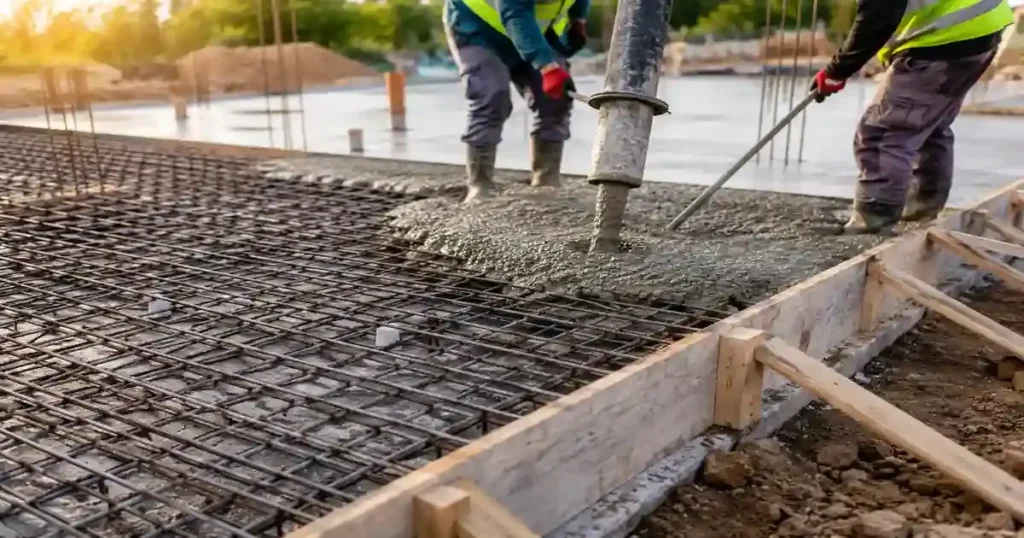
A slab foundation is a single, solid concrete pour known as a monolithic slab. Builders lay rebar inside the form before pouring, giving the concrete tensile strength once it cures. The home sits directly on top of this slab, with plumbing lines often embedded inside or running just beneath it.
Cracks form when the soil underneath swells or shrinks unevenly. Wichita Falls clay expands when wet and contracts hard during dry spells. This repeated cycle places pressure on both the edges and center of the slab, causing small cracks to develop into structural damage over time.
How Pier and Beam Foundations Are Built and Why They Shift
A pier and beam system raises the home above the ground using vertical piers, horizontal beams, and a crawl space underneath. The structure rests on a sill plate bolted to the beams, and the floor joist system spans across to support the subfloor.
Because this design includes open space below the house, it does not fight soil pressure the same way a slab does. Instead, piers can settle individually, beams can sag, and joists can weaken from moisture exposure in the crawl space.
Slab vs Pier and Beam Foundation Repair Cost in Wichita Falls
Direct answer: Slab foundation repair generally costs more than pier and beam repair in Wichita Falls, mainly because slab work involves underpinning and concrete removal, while pier and beam work happens in an open crawl space. For many homeowners, cost is the first concern, and understandably so. The price gap between these two systems can be significant, and the type of damage changes the number fast.
Average Slab Foundation Repair Costs in Wichita Falls
Slab repair pricing depends on the type of damage and how deep the crew has to dig.
- Crack repair for surface-level damage typically runs lower, especially when caught early.
- Underpinning, where steel or concrete piers are driven beneath the slab to stabilize it, costs more because of labor and material depth.
- Tunneling under the slab for plumbing access adds high cost since crews must dig channels by hand in tight spaces.
- Combined plumbing and structural repairs push costs toward the higher end of any local estimate.
Underpinning is usually the largest line item on a slab repair invoice, and homes with significant differential settlement often need multiple pier points around the perimeter.
Pier and Beam Foundation Repair Cost Breakdown
Pier and beam foundation repair cost structures look different because crews work in open crawl space rather than breaking through concrete.
- Releveling the structure with adjustable jacks is one of the more common and affordable services.
- Pier reset work, where shifted piers are realigned or replaced, adds moderate cost depending on how many piers need attention.
- Joist replacement becomes necessary when wood has rotted from moisture, and pricing depends on how many sections are affected.
- Beam replacement is the most expensive pier and beam repair since it involves structural lifting and temporary support.
In most cases, pier and beam foundation cost for general maintenance stays lower than comparable slab work, mainly because crews are not breaking concrete to reach the problem area.
Is It Cheaper to Build a Slab Foundation or Repair One Compared to Pier and Beam?
Short answer: Yes, building a slab is usually cheaper upfront than building pier and beam, but repairing a slab often costs more than repairing pier and beam. Building a slab foundation is often cheaper upfront than pier and beam construction. Repair tells a different story. Once a slab needs underpinning or plumbing access, costs frequently exceed pier and beam repair for similar severity of damage, since slab work requires breaking and replacing concrete that pier and beam systems simply do not have.
Slab vs Pier and Beam Foundation Repair Pros and Cons for Texas Homes
Every foundation type has tradeoffs, and Texas weather tends to expose them quickly. Here is how each system compares once damage shows up.
Pros of Slab Foundation Repair
- Lower ongoing maintenance once repairs are complete
- Strong load support for heavier homes
- Improved protection against pests due to the absence of an open crawl space
Cons of Slab Foundation Repair
- Plumbing access is destructive and often requires breaking concrete
- Crack repairs can become expensive once they reach structural depth
- Diagnosis is harder since damage is hidden beneath the slab
Pros of Pier and Beam Foundation Repair
Homeowners researching pier and beam foundation repair in Wichita Falls usually appreciate these advantages:
- Easy plumbing access through the crawl space without demolition
- Isolated repairs that target one section without disturbing the rest of the home
- Easier leveling using jacks and shims rather than full underpinning
Cons of Pier and Beam Foundation Repair
- Moisture risk in the crawl space, especially after heavy Texas rain
- Beam rot over time if drainage is poor
- More frequent releveling compared to slab homes
Which Foundation Handles Wichita Falls Clay Soil Better?
Direct answer: Pier and beam foundations generally handle Wichita Falls clay soil better than slab foundations because individual piers can be releveled as the soil shifts, while a slab must absorb that movement as one solid piece. This is one of the most searched questions among local homeowners, and for good reason. Expansive clay is the defining soil type across much of Wichita Falls, and it behaves unpredictably across the year.
Why Wichita Falls Soil Causes Foundation Movement
Soil shrinkage during dry months pulls moisture away from the foundation edge, while heavy spring rain saturates the same soil and causes it to expand again. This back and forth creates differential settlement, where one part of the foundation sinks or lifts faster than another. Slab foundations feel this stress directly through cracking, while pier and beam homes often shift at individual piers instead.
Which Foundation Is More Forgiving During Drought and Heavy Rain?
Pier and beam foundations tend to be more forgiving during extreme weather swings because individual piers can be adjusted without affecting the entire structure. Slab foundations, once cracked or shifted, usually require full sections to be addressed at once.
Slab vs Pier and Beam Foundation Repair After Plumbing Leaks
Direct answer: Pier and beam foundations are easier and cheaper to repair after a plumbing leak because plumbers reach pipes through the crawl space, while slab foundations often require tunneling or jackhammering to reach the same pipe. Few issues create more stress for a homeowner than a leak hiding under the house. This is where the difference between these two systems becomes most obvious.
Why Slab Plumbing Repairs Often Require Tunneling or Jackhammering
When a pipe breaks under a slab, crews often have two options: tunneling beneath the foundation or jackhammering through the concrete directly above the leak. Both methods are invasive, time-consuming, and costly compared to crawl space access. This is one of the clearest examples of slab vs pier and beam foundation repair difficulty in practice, since the same leak under a pier and beam home would take a fraction of the time to fix.
Why Pier and Beam Repairs Are Easier to Isolate and Fix
Pier and beam homes allow plumbers to access lines directly from the crawl space. Better load distribution across the piers also means a localized leak rarely threatens the structural integrity of the entire foundation, unlike a slab where water intrusion can undermine soil support across a wider area.
Which Foundation Repair Lasts Longer?
Longevity matters just as much as upfront cost, especially for homeowners planning to stay long term.
How Long Do Slab and Pier and Beam Foundations Typically Last?
Direct answer: Both slab and pier and beam foundations can last 50 years or more with proper care. Slab foundations typically last several decades with proper drainage and minimal soil movement, often matching the lifespan of the home itself when maintained well. Pier and beam foundations can also last just as long, but they tend to need more frequent small adjustments along the way rather than one major repair late in life.
Which Foundation Needs Releveling More Often in Texas?
Pier and beam homes generally need foundation leveling more often than slab homes because individual piers respond to soil movement independently. This is not necessarily a downside. It simply means maintenance happens in smaller, more affordable increments rather than one large structural repair.
Warning Signs Your Foundation Needs Repair
Catching damage early saves money no matter which foundation type you have.
Slab Foundation Warning Signs
- Wall cracks, especially near corners and door frames
- Tile cracks in kitchens and bathrooms
- Sticking doors that used to close easily
- Lifted floors in one section of the home
Pier and Beam Warning Signs
- Sagging floors that feel uneven when walking
- Bouncy floors near the center of rooms
- Soft spots in the subfloor
- Wood rot visible from the crawl space
- Water pooling under the home after rain
- Crawl space moisture that never fully dries out
How Foundation Experts Diagnose Slab and Pier and Beam Damage
Professional diagnosis goes far beyond a visual walkthrough. Experienced contractors use elevation mapping to measure how much a floor has shifted across different points in the home, identifying patterns that point to specific soil or structural causes. They also test for hydrostatic pressure around the foundation, which helps explain water-related movement that is not always visible from the surface. This level of diagnosis is part of why working with trusted foundation repair contractors in Wichita Falls makes such a difference, since accurate measurements lead to targeted repairs instead of guesswork.
How to Prevent Future Foundation Damage in Wichita Falls
Prevention is almost always cheaper than repair, and most strategies are straightforward.
- Correct drainage issues around the perimeter before water pools near the foundation
- Improve grading so water flows away from the home rather than toward it
- Maintain a consistent watering schedule near the foundation during dry months to reduce soil shrinkage
- Install gutter extensions to direct roof runoff further from the structure
- Manage root growth from nearby trees that can pull moisture from soil near the foundation
These steps matter even more in areas already affected by Texas clay soil foundation damage, since prevention slows down the natural cycle of expansion and contraction that drives most repairs in this region.
Final Verdict: Which Foundation Repair Option Is Better for Wichita Falls Homes?
There is no universal winner here. The better question is which tradeoffs fit your home and budget.
| Factor | Slab | Pier & Beam |
|---|---|---|
| Repair Cost | Higher | Lower |
| Plumbing Access | Hard | Easy |
| Releveling Frequency | Lower | Higher |
| Moisture Risk | Lower | Higher |
| Repair Speed | Slower | Faster |
| Clay Soil Adaptability | Lower | Higher |
If your home sits on a slab, budget for less frequent but more expensive repairs. If you have a pier and beam foundation, expect smaller, more regular maintenance instead of one large expense. Either way, understanding slab vs pier and beam foundation repair before damage appears puts you in a much stronger position when it actually does.
For homeowners weighing repair costs more closely, this detailed breakdown of foundation repair costs in Wichita Falls walks through pricing across different damage types in more depth. And if clay soil is the root cause behind your cracks or shifting floors, this guide on Texas clay soil foundation damage explains exactly why local soil behaves the way it does.
Frequently Asked Questions
What is the best foundation repair method for slab versus pier and beam foundations?
For slab foundations, underpinning is usually the best method for structural cracks. For pier and beam foundations, releveling and pier resets work best for similar damage. The right method always depends on the type and severity of movement.
How long do slab and pier and beam foundations typically last?
Both can last 50 years or longer with proper maintenance. Slab foundations often go longer between major repairs. Pier and beam foundations need smaller, more frequent adjustments instead of one large repair.
Is it cheaper to build a slab foundation or repair one compared to a pier and beam?
Constructing a slab foundation typically has lower initial costs. Repairing one is often more expensive than repairing pier and beam, since slab repairs frequently involve breaking and replacing concrete.
What are the biggest disadvantages of pier and beam foundations compared to slab?
The main disadvantages are moisture exposure in the crawl space, beam rot over time, and more frequent releveling compared to slab foundations.
Is slab foundation repair more expensive than pier and beam repair?
Yes, in most cases. Slab repairs that require plumbing access or underpinning typically cost more than equivalent pier and beam repairs.
Which foundation is easier to repair after a plumbing leak?
Pier and beam foundations are easier to repair after a leak. Plumbers can reach pipes directly through the crawl space instead of tunneling or jackhammering through concrete.
Which foundation handles Wichita Falls clay soil better?
Pier and beam foundations generally handle Wichita Falls clay soil better. Individual piers can be adjusted as the soil shifts, while a slab absorbs that movement as one solid piece.
How often do pier and beam foundations need leveling in Texas?
Many Texas homes need releveling every few years, especially in areas with significant seasonal moisture swings like Wichita Falls. Exact frequency depends on soil conditions and drainage.
Whether you are dealing with a cracked slab or a sagging pier and beam floor, getting an accurate diagnosis early prevents small issues from becoming expensive ones. Our team is ready to inspect your home and walk you through real options, not guesswork.